A Hope-Filled Approach to Healing Chronic Pain
Living with chronic pain can be exhausting. Perhaps you've tried medications, injections, physical therapy, massage, chiropractic care, or countless other treatments with little lasting relief. If you've been told "everything looks normal" on imaging but your pain is still very real, you may feel frustrated, confused, or even begin to question yourself.
There is hope.
As a trained Pain Reprocessing Therapy (PRT) practitioner, Pamela helps clients understand and address neuroplastic pain—pain generated by the brain and nervous system rather than ongoing tissue damage. This approach has helped many people experience significant relief and, in many cases, complete recovery from chronic pain.
What Is Neuroplastic Pain?
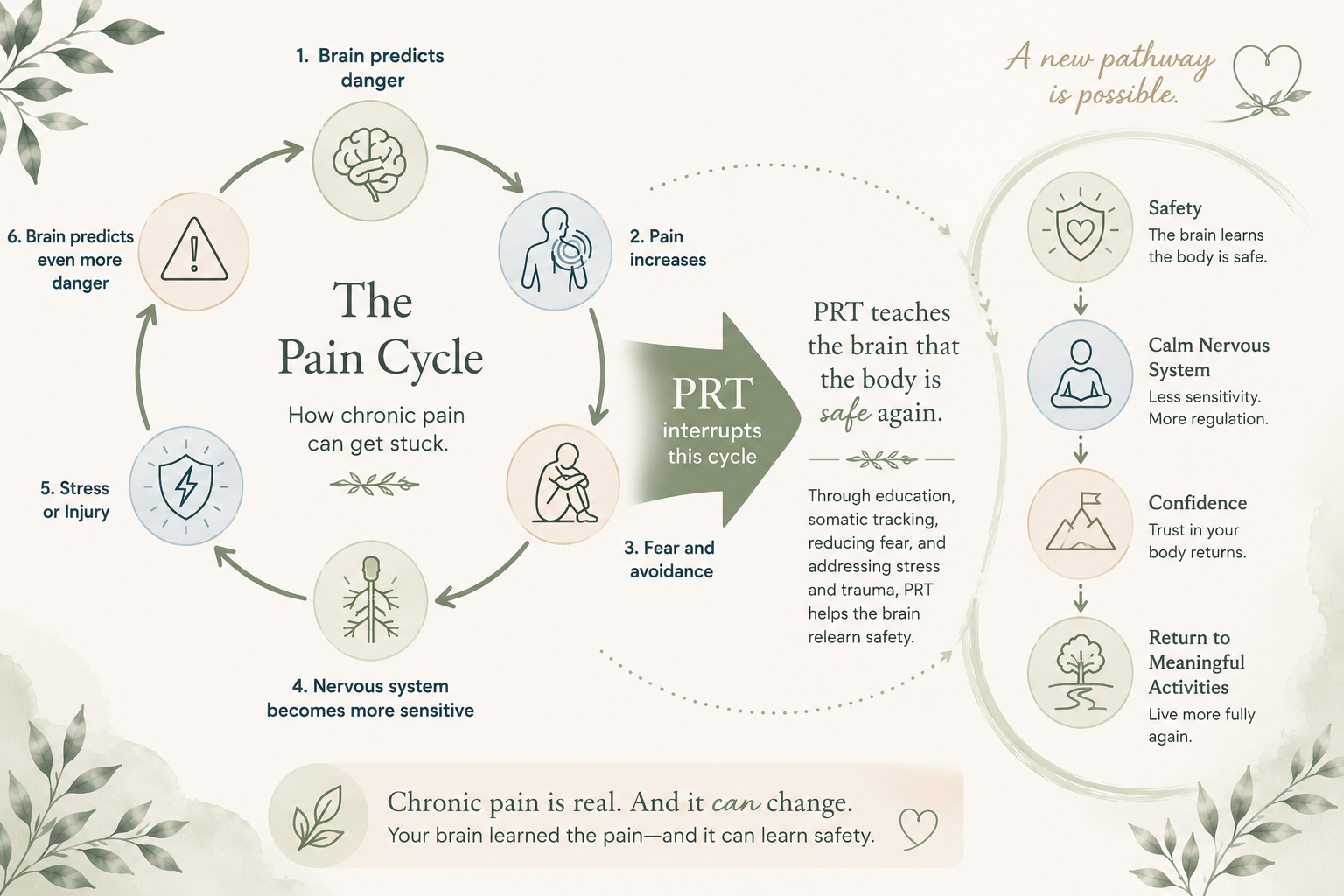
Pain always comes from the brain, but not all pain is caused by an injury that is still occurring.
Neuroplastic pain develops when the nervous system becomes "stuck" in a protective state. After an injury, illness, prolonged stress, or traumatic experience, the brain can learn to continue producing pain long after the body has healed. This pain is 100% real—it is not imagined or "all in your head." Rather, the brain has become overprotective, interpreting normal sensations as dangerous.
Just as the brain can learn pain, it can also unlearn it.
Through neuroplasticity—the brain's remarkable ability to change—we can retrain the nervous system to recognize safety again.
Conditions That May Benefit from PRT
Pain Reprocessing Therapy may be helpful for many persistent symptoms when they are neuroplastic in nature, including:
Chronic back or neck pain
Fibromyalgia
Migraines and chronic headaches
Pelvic pain
Jaw pain (TMJ)
Repetitive strain injuries
Joint pain
Sciatica without ongoing structural injury
Irritable Bowel Syndrome (IBS) and other functional gastrointestinal symptoms
Long-standing pain following an injury that has healed
Other persistent symptoms such as dizziness, fatigue, or certain functional neurological symptoms
During our work together, we will carefully determine whether a neuroplastic approach is appropriate alongside any necessary medical evaluation.
The Connection Between Trauma and Chronic Pain
Our bodies remember what our minds often cannot.
When we experience trauma, chronic stress, emotional neglect, perfectionism, people-pleasing, or prolonged pressure to suppress emotions, the nervous system may remain in a state of protection. Over time, this chronic activation can contribute to persistent pain and other physical symptoms.
Pain is not a sign of weakness. Often, it is the nervous system's attempt to protect us.
By gently helping the brain experience safety, process unresolved emotional experiences, and reduce fear around physical sensations, many people discover that their pain begins to decrease.
Healing does not require reliving every traumatic experience. Instead, we work at a pace that feels safe while helping your nervous system learn that the danger has passed.
What Is Somatic Tracking?
One of the core tools used in Pain Reprocessing Therapy is somatic tracking.
Rather than reacting to pain with fear, frustration, or avoidance, somatic tracking teaches you to observe physical sensations with curiosity, safety, and compassion.
This mindful approach helps your brain recognize that these sensations are not dangerous. As the fear surrounding pain decreases, the brain often begins turning down the "alarm system" that has been keeping pain active.
Over time, many clients notice:
Less fear of pain
Increased confidence in their bodies
Greater ability to participate in activities they had been avoiding
Reduced pain intensity and frequency
Looking Beyond the Pain
Pain rarely exists in isolation.
Part of the healing process may include exploring patterns that keep the nervous system under chronic stress, such as:
Perfectionism
Self-criticism
People-pleasing
Difficulty setting boundaries
High achievement or over-responsibility
Chronic anxiety
Suppressed emotions
Unresolved trauma
Persistent life stressors
Addressing these patterns isn't about assigning blame. Instead, it helps create the conditions for your nervous system to feel safe enough to let go of pain.
An Integrative, Whole-Person Approach
Because chronic pain affects every aspect of life, I integrate Pain Reprocessing Therapy with other evidence-based approaches when appropriate, including nervous system regulation, mindfulness, trauma-informed therapy, Internal Family Systems (IFS), EMDR, and Polyvagal-informed interventions.
Treatment is individualized to your unique history, symptoms, and goals.
Individual and Group Therapy Options
Pamela offers Pain Reprocessing Therapy in both individual counseling and group therapy.
Individual therapy provides personalized support tailored to your specific pain experience, trauma history, and nervous system patterns.
Group therapy offers education, guided exercises, encouragement, and the opportunity to heal alongside others who understand the challenges of living with chronic pain. Many clients find that hearing others' stories reduces isolation and strengthens hope for recovery.
Recovery Is Possible
For many people, chronic pain is not a life sentence.
Research on Pain Reprocessing Therapy has shown that when pain is driven by learned neural pathways rather than ongoing injury, the brain can be retrained. Many individuals experience meaningful reductions in pain—and some recover completely.
While every person's journey is different, our goal is not simply to cope with pain more effectively, but to help your nervous system move toward genuine healing whenever possible.
If you're wondering whether your symptoms may have a neuroplastic component, I'd be honored to help you explore a compassionate, evidence-based path toward relief and recovery.
Pain Reprocessing Therapy