Internal Family Systems Therapy
Heal by Understanding Every Part of You
Have you ever felt like one part of you wants to move forward while another part feels terrified? Or perhaps one part is overwhelmed with anxiety while another criticizes you for struggling.
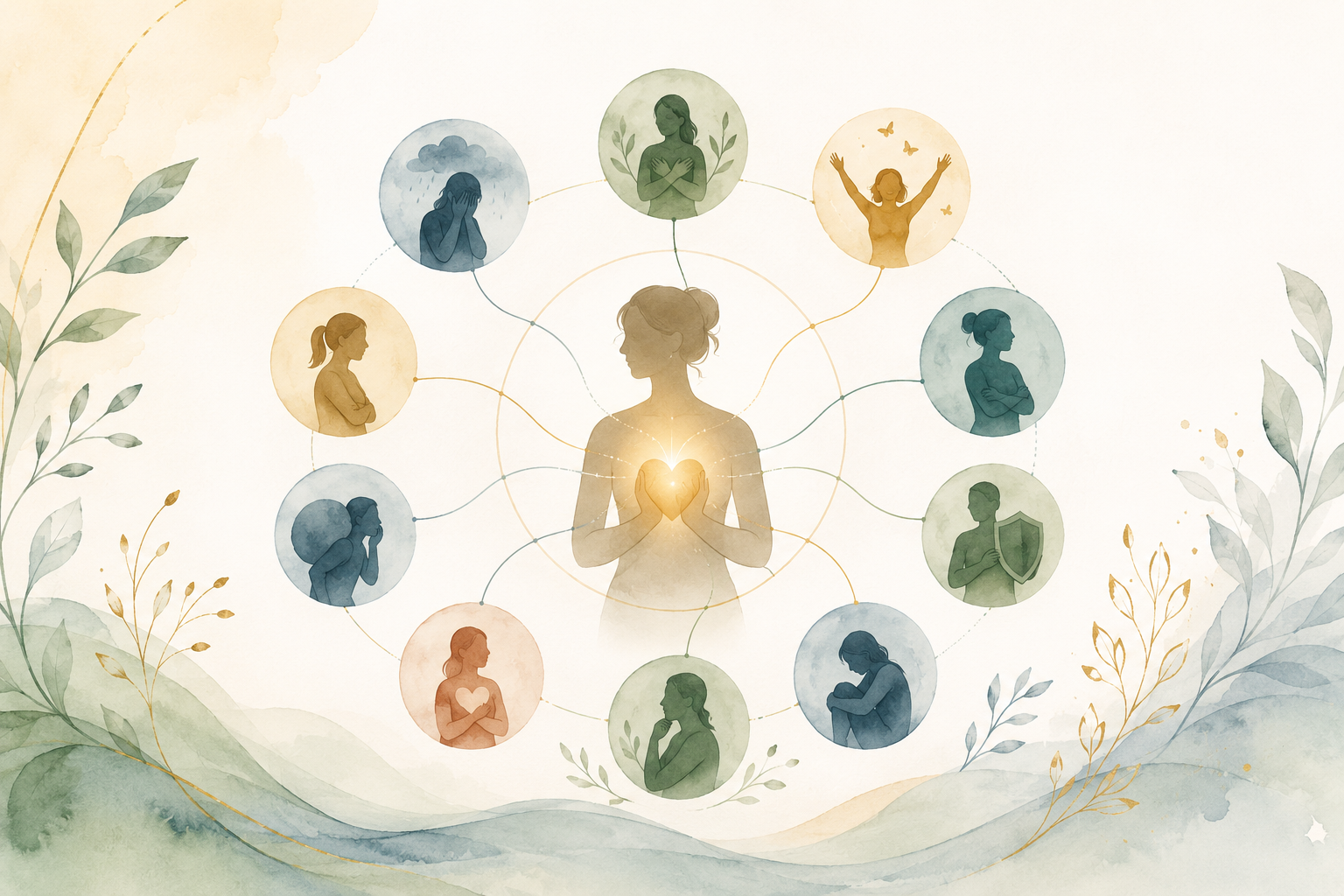
Internal Family Systems (IFS) therapy is based on a simple but powerful idea: we all have different "parts" within us, and every part has developed for a reason—even the ones that seem self-defeating or overwhelming.
Rather than trying to fight or eliminate difficult thoughts and emotions, IFS helps us understand them with curiosity and compassion. As these protective parts begin to feel safe, lasting healing becomes possible.
What Is Internal Family Systems?
Developed by psychologist Richard C. Schwartz, Internal Family Systems is
an evidence-based therapy that helps people heal trauma, anxiety, depression,
relationship difficulties, and the effects of overwhelming life experiences.
IFS recognizes that we naturally have many different internal parts, such as:
The perfectionist who works tirelessly to keep you from failing
The people-pleaser who fears disappointing others
The anxious part that constantly prepares for the worst
The inner critic that believes criticism will keep you safe
The part that wants to withdraw or numb difficult emotions
The younger wounded parts carrying pain from past experiences
These parts are not signs that something is wrong with you. They developed to protect you in the best ways they knew how.
At the core of every person is what IFS calls the Self—the calm, compassionate, wise center that naturally possesses qualities such as curiosity, confidence, courage, clarity, creativity, connectedness, and compassion.
Healing occurs as your Self begins to lead your internal system with kindness rather than fear.
How IFS Can Help
IFS has been shown to be effective for a wide variety of concerns, including:
Trauma and PTSD
Childhood neglect or abuse
Anxiety and panic
Depression
Shame and perfectionism
Religious trauma
Relationship difficulties
Grief and loss
Chronic stress and burnout
Emotional overwhelm
Dissociation
Chronic pain and nervous system dysregulation
Rather than simply managing symptoms, IFS helps address the deeper protective patterns that often keep those symptoms in place.
What an IFS Session Looks Like
IFS sessions are gentle, collaborative, and paced according to your nervous system.
Together we may:
Notice emotions, thoughts, or body sensations with curiosity
Identify the protective parts that arise during difficult situations
Understand how these parts have been trying to help
Build trust with younger wounded parts
Process unresolved experiences safely
Help your internal system experience greater peace, flexibility, and confidence
You remain in control throughout the process. We never force memories or ask parts to change before they are ready.
Our Practice's Approach to IFS
At Undivided Heart Counseling, all of our therapists are IFS-informed and utilize IFS principles to help clients understand themselves with greater compassion rather than self-judgment.
IFS integrates beautifully with many of the approaches we use throughout our practice, including EMDR, attachment-focused therapy, polyvagal-informed nervous system regulation, mindfulness, and somatic approaches. We tailor treatment to each client's unique needs rather than following a one-size-fits-all model.
Pamela's Advanced IFS Training
Pamela Harms has completed Level 3 Training in Internal Family Systems (IFS), representing advanced clinical training in the IFS model.
This training has equipped her to work with:
Complex developmental trauma
Dissociation and structural dissociation
Attachment wounds
Protective systems that feel "stuck"
Complex internal polarization
Deep emotional healing through Self-led therapy
Pamela Harms has completed Level 3 Training in Internal Family Systems (IFS), the highest level of standard clinical training currently offered through the IFS model. In addition to advanced clinical training, she has pursued specialized education in integrating IFS with Christian faith through leading Christian practitioners and authors. This combination allows her to provide both evidence-based trauma treatment and thoughtful faith integration for clients who desire it.
Faith Integration
For clients who desire it, we thoughtfully integrate Christian faith into the therapy process. Many Christian clients find that approaching themselves with compassion rather than condemnation aligns beautifully with God's heart for healing, restoration, and transformation.
Pamela has pursued specialized training in the integration of Internal Family Systems with Christian faith. She has trained under respected Christian IFS leaders Jenna Riemersma, author of Altogether You, Alison Cook and Kimberley June Miller, co-authors of Boundaries for Your Soul, and Julie Honeycutt, a certified IFS therapist and spiritual director. These trainings have focused on the thoughtful, biblically grounded integration of parts work with Christian discipleship and spiritual formation.
Whether faith is central to your healing journey or not, therapy is always tailored to your goals and values. Spiritual interventions are offered only when desired by the client and are integrated in an ethical, clinically sound manner.
You Don't Have to Fight Yourself to Heal
Many people come to counseling believing they need to get rid of their anxiety, silence their inner critic, or stop feeling overwhelmed.
IFS offers a different perspective.
Instead of fighting yourself, you can begin understanding yourself.
And when every part of you feels seen, heard, and safe, lasting healing becomes possible.